
Prologue
Stromata 3.2.5.2
καὶ συνιόντες εἰς τὸ ἱερὸν οἱ Κεφαλλῆνες κατὰ νουμηνίαν γενέθλιον ἀποθέωσιν θύουσιν Ἐπιφάνει, σπένδουσί τε καὶ εὐωχοῦνται καὶ ὕμνοι λέγονται.
M. David Litwa, Carpocrates, Marcellina, and Epiphanes (Routledge, 2022), following the manuscript Laurentianus V 3.
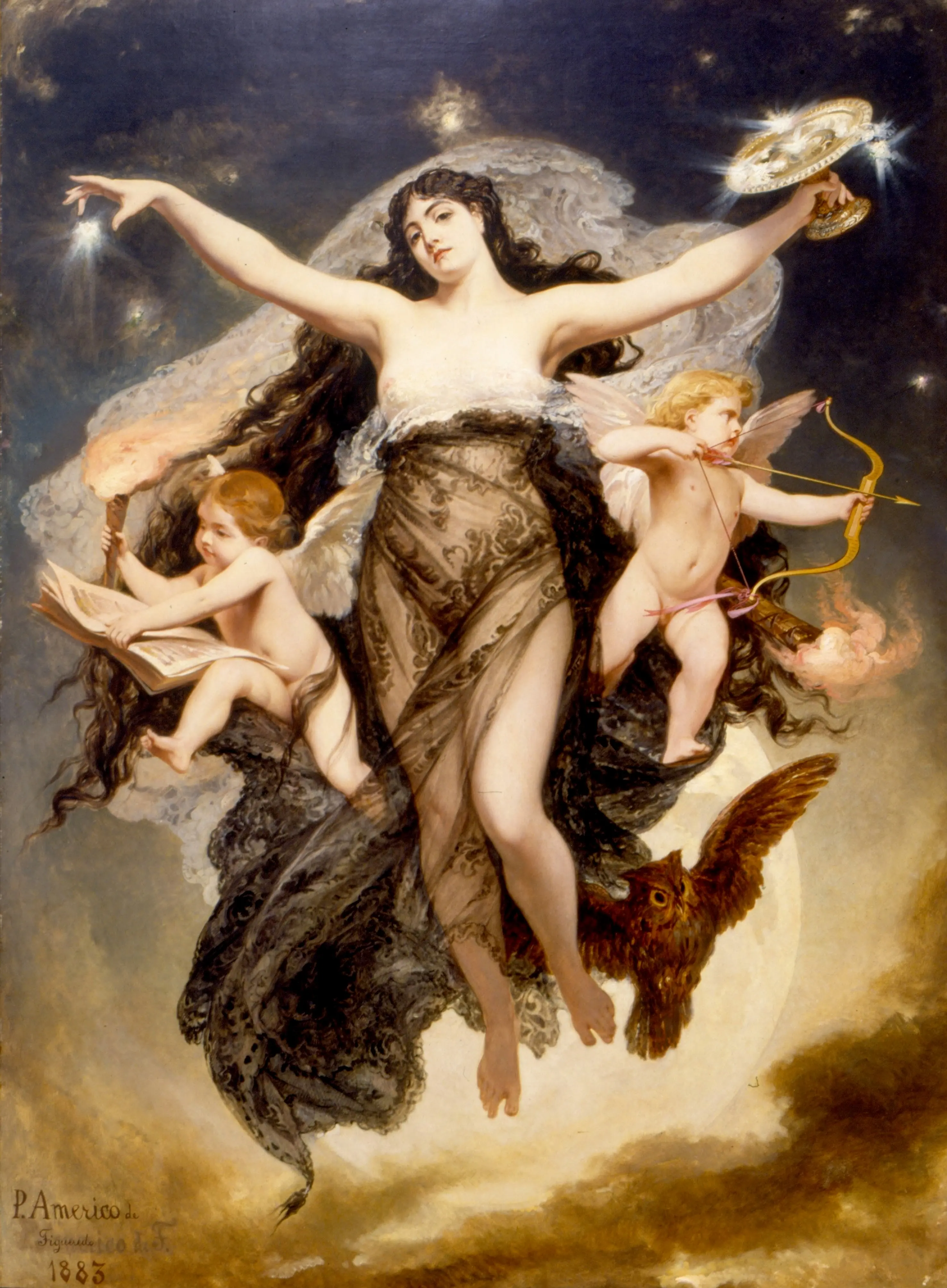
"The Cephallenians gather at the sanctuary every new moon to offer sacrifices to Epiphanes in celebration of his birthday and deification. They pour libations, feast, and recite hymns." —Clement of Alexandria
What it is
The Midnight-Molad Calendar is the liturgical reckoning of the Carpocratian Church of Commonality and Equality—a simplified, purely computational lunisolar calendar that joins three traditions: the Hebrew lunisolar year, the Roman civil day, and the Chinese mean-month rule. Molad (מולד) is the Hebrew word for “birth,” specifically the birth of the new moon. In this calendar, months follow the new moon and days turn over at civil midnight.
The Nativity
The Church holds as a matter of faith that Jesus of Nazareth was a Human Being born the ordinary way on 25 Kislev 3757. Historians typically date his birth between 6 and 4 BCE. Year 1 Anno Nativitatis (AN) begins on 1 Tishri 3757, which is 30 August 5 BCE in the proleptic Gregorian calendar; the earlier months of 5 BCE belong to year 0 AN. Years are numbered astronomically, so the year before 1 AN is 0 AN, and the one before that is −1 AN. In the Common Era, the AN year runs five years ahead of the Gregorian year from 1 Tishri to 31 December, and four years ahead from 1 January until the next 1 Tishri. 25 Kislev of year 1 is Dies Nativitatis (DN) 0: Thursday, 21 November 5 BCE (23 November in the Julian calendar). The classical Hebrew calendar puts 25 Kislev 3757 two days later, on a Saturday.
Comparison to the Roman Civil Calendar
Days turn over at civil midnight rather than sunset, as the Roman civil day did (Varro, quoted in Aulus Gellius, Attic Nights 3.2). The date is the local civil date wherever you stand, as with the Gregorian calendar. Only the heavens are placed by a fixed meridian: each mean new moon and each mean equinox is converted to Jerusalem mean time (Universal Time UT plus 2 h 20 m 51 s) and belongs to the civil day on which it falls there. An instant at exactly midnight belongs to the day that begins.
Comparison to the Hebrew Ritual Calendar
Our calendar keeps the skeleton of the historical Hebrew calendar (twelve or thirteen months from Tishri to Elul, with Adar doubled in a leap year). The year begins on 1 Tishri, and each month begins at the midnight that opens the civil day of its own mean new moon, so every month has 29 or 30 days. Nothing is spread across the months to make the year fit. A common year has 354 or 355 days, and a leap year 383 or 384.
Unlike the classical Metonic Hebrew calendar, leap years are determined directly by the spring equinox rather than by the fixed nineteen-year cycle. In each spring, the Nisan lunation is the first lunation whose fifteenth day—the civil day of its mean new moon plus fourteen—falls on or after the civil day of the mean equinox; a tie counts. We use a mean equinox year of 365.242374 days, counted from the mean March equinox of 20 March 2026 at 14:46 UT. The year begins six lunations after the Nisan lunation of the preceding spring, and it is a leap year, with thirteen months, exactly when thirteen lunations rather than twelve separate its beginning from the next. The extra month is Adar I, placed before Adar, which is then called Adar II.
This calendar does not postpone the New Year (Rosh Hashanah) to keep it off Sunday, Wednesday, or Friday, because we do not practice the Sabbath. The New Year falls on whichever weekday its new moon does. Most of the time the result is a New Year and month starts that differ from the synagogue’s by a day or two. In about one year in five, the New Years stand about a month apart.
Comparison to the Han Dynasty Calendars
From antiquity through the Han dynasty, Chinese astronomers began every lunar month on the day of the mean new moon, a method called pingshuo (平朔), and they kept doing so until 619, when the Tang dynasty adopted the true new moon. We follow the older method, so that anyone can compute the calendar without an almanac. Our mean lunation is the modern value, 29.530588861 days, counted from the mean new moon of 6 January 2000 at about 14:21 UT.
The Seven Days
- Zenithday
(Sunday) - Nadirday
(Monday) - Starboardday
(Tuesday) - Portday
(Wednesday) - Bowday
(Thursday) - Sternday
(Friday) - Jubileeday
(Saturday)
Date Converter
Turn a Gregorian date into the Midnight-Molad date, or the other way round, by days since the Nativity (Dies Nativitatis DN).
Year Inspector
How one year is built: its first day, its length, the equinox test, and each month.
Nineteen-Year Audit
The first day of each year here, set beside the classical Hebrew calendar's.
The Source
The calendar is a single plain JavaScript file with no dependencies. It is the same file this page runs, so it cannot differ from what you see above: midnight-molad.js.