
THE LIBRARY
Archives:
Connect your local Large Language Model (LLM) to our Archive's Model Context Protocol (MCP) server. No new data centers needed.

Tested on iPhone 13 mini.
Browse our FREE Exhibition Archive: Pre-ChatGPT English Wikipedia (May 2022)
Recommended books:
These books align with The School's own values. These are not referral links. We encourage you to buy from the author when possible. Otherwise, we encourage you to buy from a local bookstore or rent from your local library.

Carpocrates, Marcellina, and Epiphanes
2023
Dr. Litwa's examination of the three early Christian teachers who founded the Carpocratian movement in Alexandria and Rome is the most complete as of 2023 (and will likely remain so for some time to come).

Principles of Synthetic Intelligence
2009
Joscha Bach introduces Dietrich Dörner's PSI architecture. PSI includes three types of drives, physiological, social, and cognitive. PSI illustrates how emotions and physical drives can be included in an embodied cognitive architecture.

The Good Man Jesus and The Scoundrel Christ
2010
From the author of The Golden Compass comes a biblical fiction that contests the gospels and presents his own version of the dual life of Jesus Christ, the man and the savior.

The Case Against Reality
2019
Challenging leading scientific theories that claim that our senses report back objective reality, cognitive scientist Donald Hoffman argues that while we should take our perceptions seriously, we should not take them literally.

God & Golem, Inc.
1966
A Comment on Certain Points Where Cybernetics Impinges on Religion


Religion for Atheists
2013
Alain De Botton suggests that rather than mocking religion, agnostics and atheists should instead steal from it—because the world’s religions are packed with good ideas on how we might live and arrange our societies.

Awakening from the Meaning Crisis: Origins
2024
Based on the first 25 videos of Vervaeke's famous YouTube lectures, the authors trace the history of what led to our contemporary malaise, offering scientific, spiritual, and philosophical interweaving threads that ground us in the troubling truth of our extraordinary evolution.

The Gnostic Gospels
1979
The landmark study exploring alternative perspectives of early Christianity as revealed through the Nag Hammadi texts that could have shaped the religion differently if included in the Christian canon.

Steps to an Ecology of Mind
2000
"[Bateson] examines the nature of the mind, seeing it not as a nebulous something, somehow lodged somewhere in the body of each man, but as a network of interactions relating the individual with his society and his species and with the universe at large."—D. W. Harding
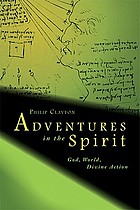
Adventures in The Spirit
2008
Clayton's pioneering work develops new models of God and the God-world relation in light of panentheism and emergent complexity and models an open-minded Christian theology that still respects tradition.

The Law of Freedom and Other Writings
1649
In the heady and exciting days of the English Revolution, the Diggers stand out for their radicalism, and their proposals to abolish money and private property, and to collectivize the land.

Debt: The First 5,000 Years
2011
The language of the ancient works of law and religion (words like “guilt,” “sin,” and “redemption”) derive in large part from ancient debates about debt, and shape even our most basic ideas of right and wrong. We are still fighting these battles today.

When Minds Converse
2025
We do not speak because our human minds are special; our minds are special because we can speak. The book is original in method as well as adventurous in scope, developing an empirically informed thought experiment to defend its society-first view of the mind.

Original Blessing
1995
A work intended to uncover the basis of a pessimistic Christianity based on the concept of "original sin."

A Mind for Numbers
2012
Dr. Oakley lets us in on the secrets to learning effectively—secrets that even dedicated and successful students wish they’d known earlier. Contrary to popular belief, math requires creative, as well as analytical, thinking.

Braiding Sweetgrass
2015
In reflections that range from the creation of Turtle Island to the forces that threaten its flourishing today, Robin Wall Kimmerer circles toward a central argument: that the awakening of ecological consciousness requires the acknowledgment and celebration of our reciprocal relationship with the rest of the living world.

The Gift
2022
Drawing on examples from folklore and literature, history and tribal customs, economics and modern copyright law, Lewis Hyde demonstrates how our society—governed by the marketplace—is poorly equipped to determine the worth of artists’ work.

The Gospel of Mary of Magdala
2003
This brief narrative rejects Jesus' suffering and death as a path to eternal life and exposes the view that Mary Magdalene was a prostitute for what it is--a piece of theological fiction.
THE LIBERAL ARTS
Together, these three arts move you from recognition → reasoning → expression. Grammar gives you the building blocks, Logic gives you the structure, and Rhetoric gives you the power to bring your ideas into the world.

25 minutes
Lvl. 6th grade

31 minutes
Lvl. 7th grade

58 minutes
Lvl. 9th grade
THE WORLD SCIENCES
Together, these four sciences will give you a deep familiarity with numbers. Arithmetic number itself, Geometry: number in space, Music: number in time, and Astronomy: number in space-time.

28 minutes
Lvl. 5th grade

95 minutes
Lvl. 7th grade

27 minutes
Lvl. 10th grade

50 minutes
Lvl. 8th grade