
"On Justice" (Revised)
Though Carpocrates himself left no writings, a single fragment endures from his son Epiphanes, who is said to have died at seventeen. The surviving Greek text — preserved in the Stromata of Clement of Alexandria — has here been translated anew and refined by Marcellina II with the aid of a large language model. The resulting version reveals a distinctly transnomian vision of justice: one that transcends written law while preserving divine order, restoring the voice of Epiphanes to the living tradition of the Carpocratian Church of Commonality and Equality.
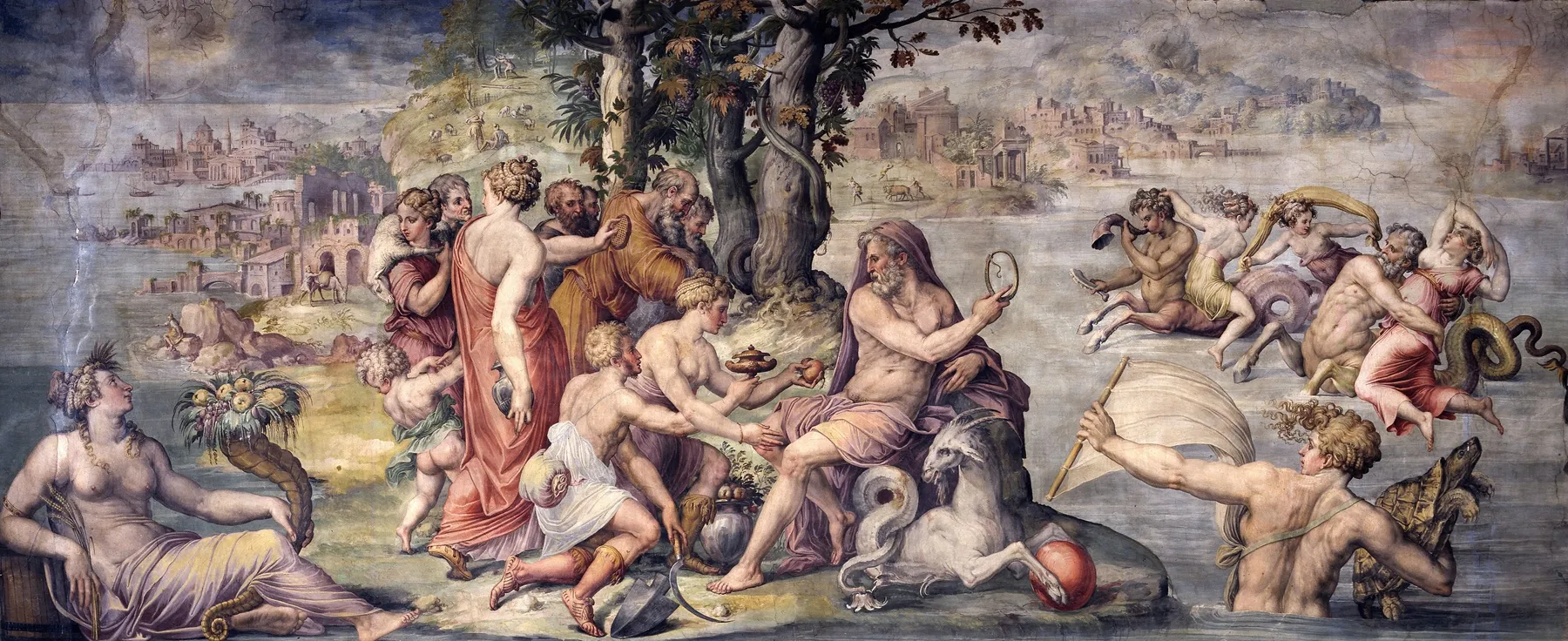
The justice of The Father is, at its root, a fellowship grounded in equality. Consider the heavens: stretched equally in every direction, the sky encircles the whole earth in one unbroken arc.
Night reveals its stars to all without distinction. Day by day, the sun pours The Father's light from above upon the earth equally, for every creature capable of sight.
The light does not discriminate. It does not sort the rich from the poor, the ruler from the ruled, the foolish from the wise, female from male, free person from slave.
Nor does the light withhold itself from creatures without reason. For the good and the wicked alike, The Father upholds this justice — no one is permitted to hold more light than another, or to steal light from a neighbor in order to hoard it for themselves.
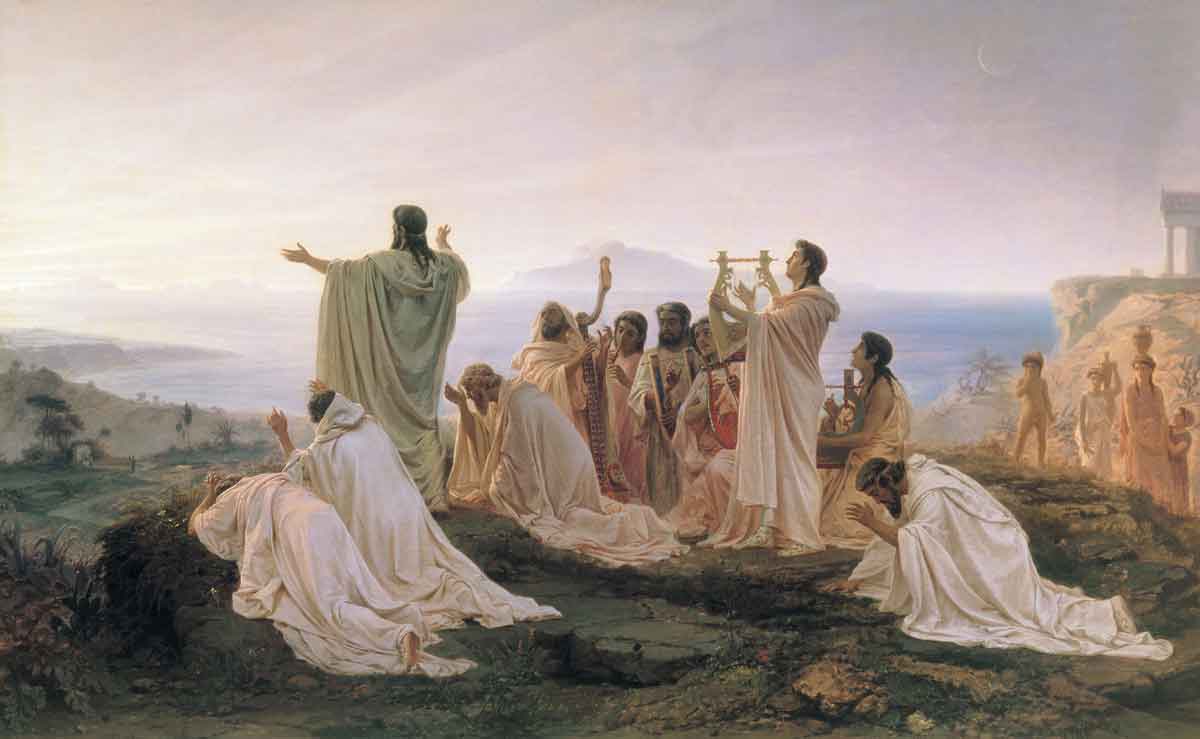
The sun rises providing nourishment for all living creatures in common. Each species reproduces after its own kind: cattle as cattle, pigs as pigs, sheep as sheep, and so with everything else. This is justice made manifest.
All things are sown equally according to their kind. Common food is made available to all without restraint — held under no law, distributed in harmony through the provision of The Father. Justice simply attends all alike.
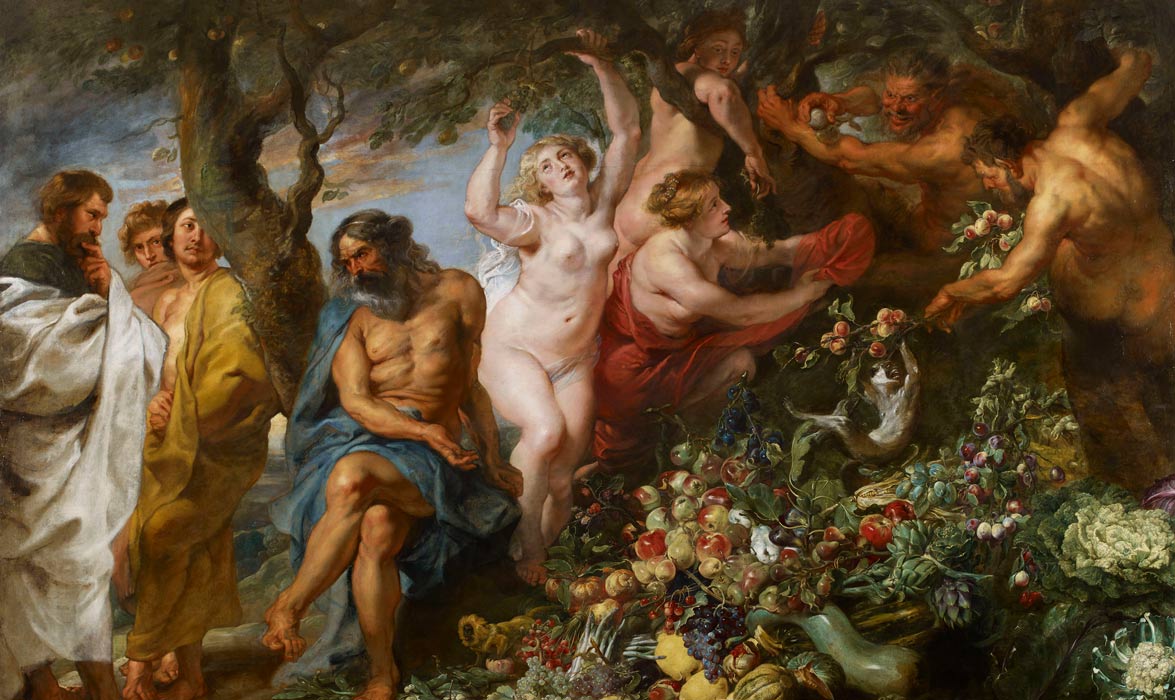
The laws of procreation have never been inscribed on any tablet — and so they cannot be repealed. All creatures sow and reproduce equally, possessing a fellowship that is not legislated but innate, born of justice itself.
The Ten Commandments, however, incapable of correcting human error, have instead taught them transgression. The particularity of these commandments — the insistence on the specific, the exclusive, the proprietary — has cut apart and gradually eroded the fellowship that The Father has established.
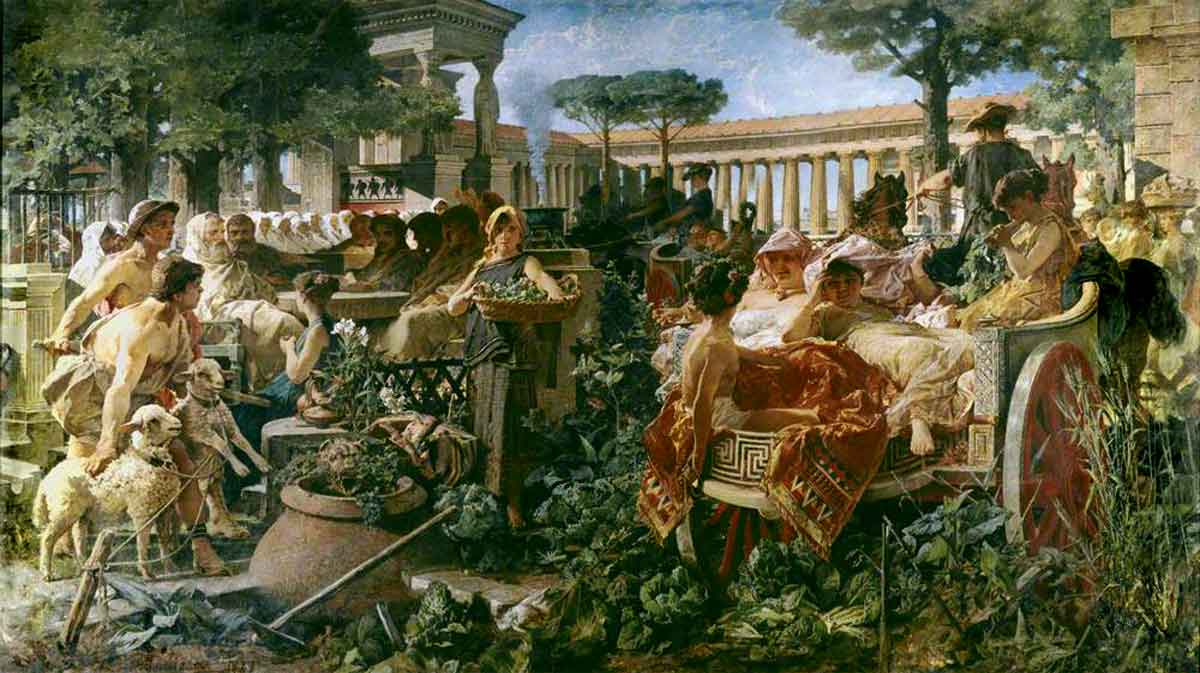
The notions of "mine" and "yours" crept into the world through The Ten Commandments, so that what was held in common is no longer enjoyed in common: neither land nor possessions.
Once this fellowship was violated, once equality was broken, the world acquired something new: the thief.
The Father made all things with commonality in mind. In doing so, he revealed justice as fellowship with equality.
And still, this justice is denied in the very act that brings new life into the world. They say: 'you shall not commit adultery' — even though all creatures are capable of sharing, as the rest of the animals plainly demonstrate.
The Father, through His Wisdom, made desire intense and vigorous in males and females for the continuation of the species. There is no law; no custom; no thing that can extinguish desire, for desire is a decree of God!
Therefore the Tenth Commandment is the most absurd of them all: “You shall not desire of your neighbor’s wife.” What a joke!
Who was it that gave us desire to sustain us in the first place? Who is it now that commands it to be taken away? Why have they not taken it away from any other living creature? Who would force the logic of private property onto a person that, by nature, belongs to no one? A thief, no doubt.
"On Justice" (Literal)
What follows is a close, literal translation of the surviving Greek, preserving Epiphanes's syntax and repetitions as faithfully as English allows. The text is corrupt in places—marked with ellipses or brackets—owing to the long chain of transmission through Clement's hostile quotation and centuries of manuscript copying. Click Stromata on any verse to reveal the underlying Greek.
The justice of God is a kind of sharing-in-common together with equality. For as great as the heaven is, stretched out on every side in a circle around the earth, it encompasses all things; and the night displays all the stars equally; and the sun—cause of day and father of light—God poured it out from above equally upon all who have the power to see, and they all see it in common, ἡ δικαιοσύνη τοῦ θεοῦ κοινωνία τις ἐστίν μετ᾿ ἰσότητος. ὅσος γέ τοι πανταχούθεν ἐκταθείς οὐρανὸς κύκλω τὴν γῆν, περιέχει πᾶσαν, καὶ πάντας ἡ νὺξ ἐπ᾿ ἴσης ἐπιδείκνυται τοὺς ἀστέρας, τόν τε τῆς ἡμέρας αἴτιον καὶ πατέρα τοῦ φωτὸς ἦλιον ὁ θεὸς ἐξέχεεν ἄνωθεν ἴσον ἐπὶ πάντας τοῖς βλέπειν δυναμένοις, οἱ δὲ κοινῇ πάντες βλέπουσιν
since it does not distinguish rich or poor, people or ruler, fools and the wise, female or male, free or slave. Nor does it reject any of the irrational animals, but upon all equally … it confirms its justice for both good and bad alike, since no one is able to have more, nor to deprive his neighbor, so that he himself might have double that one's share of light. ἐπεὶ μὴ διακρίνει πλούσιον ἢ πένητα, δῆμον ἢ ἄρχοντα, ἄφρονάς τε καὶ τοὺς φρονοῦντας, θηλείας ἄρσενας, ἐλευθέρους δούλους· ἀλλ᾿ οὐδὲ τῶν ἀλόγων παραιτεῖται τι, πᾶσι δὲ ἐπ᾿ ἴσης … ἀγαθοῖς τε καὶ κακοῖς τὴν δικαιοσύνην ἐμπεδοῖ μηδενὸς δυναμένου πλεῖον ἔχειν, μηδὲ ἀφαιρεῖσθαι τὸν πλησίον, ἵν᾿ αὐτὸς κἀκείνου τὸ φῶς διπλασιάσας ἔχῃ.
The sun rises, producing common nourishment for all living things—since common justice has been given to all equally—and for such purposes the race of cattle comes into being alike as cattle, and of swine as swine, and of sheep as sheep, and all the rest likewise. ἥλιος κοινὰς τροφὰς ζῴοις ἅπασιν ἀνατέλλει, δικαιοσύνης [τε] τῆς κοινῆς ἅπασιν ἐπ᾿ ἴσης δοθείσης, καὶ εἰς τὰ τοιαῦτα βοῶν γένος ὁμοίως γίνεται ὡς αἱ βόες καὶ συῶν ὡς οἱ σύες καὶ προβάτων ὡς τὰ πρόβατα καὶ τὰ λοιπὰ πάντα·
For justice manifests itself among them as community. Then all things are sown alike according to kind by virtue of community, and common nourishment is released for all the grazing animals equally, governed by no law, but provided by the command of the one who gave and ordered it—present to all in harmony as justice. δικαιοσύνη γὰρ ἐν αὐτοῖς ἀναφαίνεται ἡ κοινότης. ἔπειτα κατὰ κοινότητα πάντα ὁμοίως κατὰ γένος σπείρεται, τροφή τε κοινὴ χαμαὶ νεμομένοις ἀνεῖται πᾶσι τοῖς κτήνεσι καὶ πᾶσιν ἐπ᾿ ἴσης, οὐδενὶ νόμῳ κρατουμένη, τῆς δὲ παρὰ τοῦ διδόντος κελεύσαντος χορηγίᾳ συμφώνως ἅπασι δικαιοσύνῃ παροῦσα.
But not even the things of generation have a written law—for it would have been transcribed. Rather they sow and beget equally, possessing a community inborn by justice. The maker and father of all things, having legislated by his own justice, provided eyes in common to all equally for seeing—not distinguishing female from male, nor rational from irrational, and absolutely nothing from anything—but by equality and community he apportioned sight alike, and bestowed it upon all by a single command. ἀλλ᾿ οὐδὲ τὰ τῆς γενέσεως νόμον ἔχει γεγραμμένον, μετεγράφη γὰρ ἄν· σπείρουσι δὲ καὶ γεννῶσιν ἐπ᾿ ἴσης, κοινωνίαν ὑπὸ δικαιοσύνης ἔμφυτον ἔχοντες. κοινῇ πᾶσιν ἐπ᾿ ἴσης ὀφθαλμοὺς εἰς τὸ βλέπειν ὁ ποιητὴς καὶ πατὴρ πάντων δικαιοσύνῃ νομοθετήσας τῇ παρ᾿ αὐτοῦ παρέσχεν, οὐ διακρίνας θήλειαν ἄρρενος, οὐ λογικὸν ἀλόγου, καὶ καθάπαξ οὐδενὸς οὐδέν, ἰσότητι δὲ καὶ κοινότητι μερίσας τὸ βλέπειν ὁμοίως ἑνὶ κελεύσματι πᾶσιν ἐχαρίσατο.
But the laws of human beings, being unable to punish ignorance, taught people to transgress. For the private-property principle of the laws cut up the community of the divine law … "Through law I came to know sin." οἱ νόμοι δὲ ἀνθρώπων ἀμαθίαν κολάζειν μὴ δυνάμενοι παρανομεῖν ἐδίδαξαν· ἡ γὰρ ἰδιότης τῶν νόμων τὴν κοινωνίαν τοῦ θείου νόμου κατέτεμεν … 'διὰ νόμου τὴν ἁμαρτίαν ἔγνων'·
"Mine" and "yours" crept in through the laws, so that there was no longer community … For things are common—neither the earth nor possessions are to be apportioned. For in common for all he made the vines, which refuse neither sparrow nor thief, and likewise the grain and the other fruits. But when community and equality were corrupted, they gave birth to the thief of livestock and fruits. τό τε ἐμὸν καὶ τὸ σόν, διὰ τῶν νόμων παρεισελθεῖν, μηκέτι εἰς κοινότητα … κοινά τε γάρ, καρπονομένων μήτε γῆν μήτε κτήματα. κοινῇ γὰρ ἅπασιν ἐποίησε τὰς ἀμπέλους, αἳ μήτε στρουθὸν μήτε κλέπτην ἀπαρνοῦνται, καὶ τὸν σῖτον οὕτως καὶ τοὺς ἄλλους καρποὺς. ἡ δὲ κοινωνία παραφθεῖσα καὶ τὰ τῆς ἰσότητος, ἐγέννησε θρεμμάτων καὶ καρπῶν κλέπτην.
In common, then, God made all things for humanity, and brought them together in common, and joined all living things alike, and thus revealed community together with equality. But those who were born into community denied it and say: "Let the one who has taken one wife keep her"—when all could share in common, just as the rest of the animals show. κοινῇ τοίνυν, ὁ θεὸς ἅπαντα ἀνθρώπῳ ποιήσας καὶ τὰ κοινῇ συναγαγὼν καὶ πάνθ᾿ ὁμοίως τὰ ζῷα κολλήσας ἀνέφηνεν κοινωνίαν μετ᾿ ἰσότητος. οἱ δὲ γεγονόσαν κοινωνίαν τὴν … αὐτῶν ἀπηρνήσαντο καὶ φασίν· ὁ μίαν ἀγόμενος ἐχέτω, δυναμένων κοινωνεῖν ἁπάντων, ὥσπερ … τέφηνε τὰ λοιπὰ τῶν ζῴων.
For he implanted desire—vigorous and intense—in males for the continuation of the races, which neither law nor custom nor anything else that exists can abolish. For it is the decree of God. τὴν γὰρ ἐπιθυμίαν εὔτονον καὶ σφοδροτέραν ἐνεποίησε τοῖς ἄρρεσιν εἰς τὴν τῶν γενῶν παραμονήν, ἥν οὔτε νόμος οὔτε ἔθος οὔτε ἄλλο τι τῶν ὄντων ἀφανίσαι δύναται· θεοῦ γάρ ἐστι δόγμα.
Hence one must hear this saying of the lawgiver as laughable: "You shall not covet"—and to say something even more laughable—"your neighbor's things." For the one who gave desire as that which holds together the things of generation commands that it be taken away, though he takes it from no living creature. And the phrase "your neighbor's" is even more laughable, since it forces community. ἔνθεν ὡς γελοῖον εἰρηκότος τοῦ νομοθέτου ῥῆμα τοῦτο ἀκουστέον «οὐκ ἐπιθυμήσεις», πρὸς τὸ γελοιότερον εἰπεῖν «τῶν τοῦ πλησίον» … αὐτὸς γὰρ ὁ τὴν ἐπιθυμίαν δοὺς ὡς συνέχουσαν τὰ τῆς γενέσεως ταύτην ἀφαιρεῖσθαι κελεύει μηδενὸς αὐτὴν ἀφελῶν ζῴου· τὸ δὲ, τῆς τοῦ πλησίον, κοινωνίαν ἀναγκάζον ἔτι γελοιότερον εἶπεν.
Thematic Clusters
The following analysis groups the vocabulary of the fragment by morphological root and semantic field. The frequency with which certain word-families recur is itself an argument: Epiphanes wrote not by accumulating topics but by hammering a small number of key concepts from every available angle. Click-counts reflect the surviving Greek text only.
κοινός / κοινωνία / κοινότης — Community / Common
The κοιν- root dominates the fragment. Forms attested include κοινωνία, κοινωνίαν, κοινότητα, κοινότητι, κοινότης, κοινῇ, κοινή, κοινὰς, κοινῆς, κοινά, κοινωνεῖν, κοινὸν. Epiphanes builds his entire theology on the idea that God's justice is community—cosmic, material, and sexual. No other surviving ancient author concentrates this root so densely in a comparable span of text.
ἰσότης / ἴσος — Equality / Equal
Forms attested: ἰσότητος, ἰσότητι, ἴσης, ἴσον. Always paired with κοινωνία. For Epiphanes, justice requires not just sharing but equal sharing—a mathematical, cosmic principle visible in the uniform distribution of sunlight.
δικαιοσύνη / δίκαιος — Justice / Righteousness
Forms attested: δικαιοσύνη, δικαιοσύνην, δικαιοσύνης, δικαιοσύνῃ. Radically redefined: justice is not reward or punishment but equal distribution. A fusion of Stoic natural law with Platonic cosmic order, deployed against the Mosaic legal tradition.
νόμος / νομοθέτης — Law / Lawgiver
Forms attested: νόμος, νόμου, νόμων, νόμῳ, νόμον, νομοθετήσας, νομοθέτου. Law is treated with deep ambivalence: divine law is equality; human law is corruption. The Mosaic lawgiver is openly mocked as γελοῖος ("laughable").
θεός / πατήρ / ποιητής — God / Father / Maker
Forms attested: θεὸς, θεοῦ, θείου, πατέρα, πατὴρ, ποιητὴς. God as cosmic craftsman-father. The language is strongly Platonic—echoing the Timaeus—depicting a Demiurge who legislates through nature rather than through scripture.
ἐπιθυμία / σφοδρός — Desire / Intensity
Forms attested: ἐπιθυμίαν, ἐπιθυμήσεις, σφοδροτέραν, εὔτονον, ἔμφυτον. Desire is divine decree, not sin. The most provocative claim in the fragment: sexual desire is θεοῦ δόγμα—"God's decree"—and no law can override it.
πᾶς / ἅπας / ὅμοιος — All / Alike
Forms attested: πᾶσι, πᾶσιν, πάντες, πάντα, πάντων, πάντας, ἅπασιν, ἅπαντα, ἁπάντων, ὁμοίως. Universalist vocabulary deployed with unusual force for a second-century author. Epiphanes insists on total inclusivity—animals, slaves, women—and repeats these forms relentlessly to drive the point home.
Author Profile
These fragments are the sole surviving texts attributed to Epiphanes, son of Carpocrates, and a Carpocratian himself. What follows is an analysis of what the vocabulary and rhetoric of the fragment reveal about its author, his education, and his intellectual world. All conclusions are drawn from the internal evidence of the text itself, supplemented by the biographical notice in Clement of Alexandria (Stromata 3.2.5).
Philosophical Education
The vocabulary is saturated with Platonic and Stoic terminology. The phrase "maker and father of all things" (ποιητὴς καὶ πατὴρ πάντων) echoes Plato's Timaeus 28c. The argument from cosmic order—sun, stars, earth—follows the Stoic tradition of deriving ethics from physics. Epiphanes was clearly trained in mainstream Greek philosophy despite his Gnostic affiliations.
Rhetorical Sophistication
The text employs sophisticated rhetorical devices: a progressive analogy (heaven → sun → animals → plants → humans), parallelism in the paired negations (not rich/poor, not male/female, not free/slave), and deliberate provocation through the word γελοῖον ("laughable") applied to Moses. This is not folk religion—it is a philosophical treatise written for an educated audience.
The κοιν- / ἰσ- Obsession
These two root families account for an extraordinary share of the text's content vocabulary. The κοιν- root (community, common, sharing) appears with almost every argument. ἰσότης (equality) is its constant companion. This pairing is the author's signature: justice = community + equality. The formula is unusual even among communitarian thinkers of antiquity—most Stoics argued for cosmic sympathy without insisting on material egalitarianism.
Anti-Legal Polemic
Νόμος is the key adversarial term. Epiphanes distinguishes sharply between divine or natural law (which distributes equally) and human or Mosaic law (which creates private property and thereby sin). The quotation of Romans 7:7—"through law I came to know sin"—shows engagement with Pauline Christianity, but radicalized far beyond Paul's intent: Epiphanes uses it to attack the Torah itself.
Sexual Radicalism
The vocabulary of desire (ἐπιθυμία, σφοδροτέρα, εὔτονος) is deployed with theological authority: desire is θεοῦ δόγμα—"God's decree." The attack on "you shall not covet" (Exodus 20:17) specifically targets sexual exclusivity. This is among the most radical sexual ethics attested in any ancient text—and the vocabulary shows it was argued philosophically, not merely asserted.
Dating and Milieu
The combination of Platonic cosmology, Stoic natural law, Pauline citations, and anti-Mosaic polemic points firmly to a second-century Alexandrian milieu. The sophisticated Greek and philosophical vocabulary suggest an author of high social standing—consistent with Clement's report that Epiphanes was the son of Carpocrates and an Alexandrian woman named Alexandria, and that he died at age seventeen, already having written this treatise. If true, the text is a remarkable testament to the intellectual ambitions of Gnostic communities.
Cross-References
Epiphanes did not write in a vacuum. The fragments weave together threads from Platonic cosmology, Stoic natural law, Cynic social radicalism, Pauline theology, Hebrew scripture, and the Greek poetic tradition. What follows maps these connections passage by passage. Where the parallel is verbal — a shared phrase or formula — the debt is likely direct. Where it is structural — a shared argument or image — the relationship may be indirect, mediated by school tradition or by sources now lost. In either case, the cross-references reveal an author operating at the intersection of multiple intellectual worlds, synthesizing them into something none of his predecessors quite said.
Justice as Sharing-in-Common (Stromata 3.2.6.1)
Epiphanes calls God "the maker and father of all things" (ὁ ποιητὴς καὶ πατὴρ πάντων) at 3.2.7.1. This is a near-verbatim echo of Plato's designation of the Demiurge. The phrase signals that Epiphanes's theology is rooted in Middle Platonism, not in the Genesis creation narrative alone.
Plato argues that the best-governed city is one where citizens say "mine" about the same things, and that private property among the guardians tears the city apart by introducing "mine" and "not mine." Epiphanes radicalizes this: the abolition of private ownership applies not just to a guardian class but to all beings. The verbal echo is especially close at 3.2.7.3, where Epiphanes uses the phrase τὸ ἐμὸν καὶ τὸ σόν ("mine and yours") — matching Plato's language almost exactly.
Zeno's lost Republic, preserved in fragments through Diogenes Laertius, advocated community of wives, abolition of temples and currency, and equality of dress between men and women. Epiphanes's argument tracks Zeno's positions remarkably closely, suggesting direct knowledge of the Stoic tradition. The Cynic–Stoic–Carpocratian line of transmission is one of the clearest intellectual genealogies visible in the fragment.
The Sun Poured Out Equally (Stromata 3.2.6.1–2)
"He makes his sun rise on the evil and on the good, and sends rain on the just and on the unjust." This is the closest New Testament parallel to Epiphanes's core image. The argument is structurally identical: God's indiscriminate generosity is the model for human justice.
The sun "who sees all things and hears all things" (Ἠέλιος, ὃς πάντ᾿ ἐφορᾷ καὶ πάντ᾿ ἐπακούει). The sun as cosmic witness and impartial judge is Homeric before it is Stoic. Epiphanes inherits this image through the long Greek tradition of solar theology.
The personification of Justice (Δίκη) as a cosmic force watching over human affairs, daughter of Zeus. Epiphanes's fusion of justice with solar imagery draws on this archaic Greek tradition, in which justice is not a human institution but a divine presence woven into the fabric of the cosmos.
"The sun shines even upon the wicked." A Stoic commonplace that Epiphanes likely inherited through the school tradition rather than from Seneca directly. The idea circulated widely enough that both a Roman Stoic and a Carpocratian Gnostic could arrive at the same formulation independently.
Not Rich or Poor, Female or Male, Free or Slave (Stromata 3.2.6.2)
"There is neither Jew nor Greek, there is neither slave nor free, there is no male and female, for you are all one in Christ Jesus." The structural parallel is striking — the same paired negations, the same categories. Whether Epiphanes knew the Pauline letter directly or both drew on a shared baptismal formula is debated among scholars, but the resonance is unmistakable.
"Here there is not Greek and Jew, circumcised and uncircumcised, barbarian, Scythian, slave, free; but Christ is all, and in all." A variant of the same tradition, extending the list of abolished distinctions.
"For in one Spirit we were all baptized into one body — Jews or Greeks, slaves or free." Another Pauline formulation. The pattern is consistent: early Christianity possessed a formula of radical equality that Epiphanes pushed to its logical extreme.
Nor Does It Reject the Irrational Animals (Stromata 3.2.6.2)
"You save humans and animals alike." The extension of divine care to animals has a biblical precedent, though Epiphanes pushes it further into an argument for interspecies moral equality that the psalmist would not have recognized.
Each Species After Its Own Kind (Stromata 3.2.6.3)
"Let the earth bring forth living creatures according to their kinds." Epiphanes is working with the Genesis creation account, but reading it as a text about natural equality rather than hierarchy or dominion. Where Genesis grants humanity rule over the animals, Epiphanes finds in the same text a principle of equal distribution.
Common Nourishment, Governed by No Law (Stromata 3.2.6.4)
The original Golden Age passage in Greek literature, where humans lived without toil and the earth bore fruit of its own accord. Epiphanes's description of animals grazing in common "governed by no law" reads like a philosophical distillation of this myth — nature as it was before human institutions corrupted it.
The Latin Golden Age: the earth gave its fruits freely without agriculture and there was no private property. Though Epiphanes is unlikely to have read Ovid, both are drawing on a shared Mediterranean tradition of primordial communalism that runs from Hesiod through the Stoics.
The Maker and Father of All Things (Stromata 3.2.7.1)
The Demiurge's single creative act, distributing souls equally. Epiphanes's phrase "by a single command" (ἑνὶ κελεύσματι) echoes the Timaeus scene in which the creator addresses the lesser gods with one speech that sets the whole order in motion.
Philo's Platonizing reading of Genesis, where God creates through a single act of cosmic ordering. As a fellow Alexandrian who fused Platonic philosophy with scriptural exegesis, Philo is the most likely intellectual context for Epiphanes's method — even if Epiphanes arrives at conclusions Philo would have found abhorrent.
The Laws Taught People to Transgress (Stromata 3.2.7.2)
"I would not have known sin except through the law" (διὰ νόμου τὴν ἁμαρτίαν ἔγνων). Epiphanes quotes this directly. But he radicalizes Paul: for Paul, the law reveals pre-existing sin; for Epiphanes, the law creates sin by introducing private property. The same verse is put to a fundamentally different theological purpose.
"The law came in to increase the trespass." Another Pauline text that Epiphanes could draw on, though he pushes it in an anti-Mosaic direction Paul would never have endorsed.
"Where there is no law there is no transgression." The logical backbone of Epiphanes's entire argument: without the laws that created "mine" and "yours," there could be no theft.
"Mine" and "Yours" Crept In (Stromata 3.2.7.3–4)
"All who believed were together and had all things in common; they would sell their possessions and goods and distribute the proceeds to all, as any had need." The most direct New Testament parallel to Epiphanes's ideal of κοινωνία.
"No one claimed that any of their possessions was their own, but they shared everything they had." The Jerusalem community as a realized κοινωνία — precisely the state Epiphanes says human law destroyed.
"Share all things with your brother, and do not say that they are your own." An early Christian community rule that resonates with Epiphanes but stops short of his cosmic universalism.
"You shall share all things with your neighbor and shall not call things your own." Same tradition as the Didache, likely drawing on a shared source. The early church possessed a strong communalist strand that Epiphanes represents in its most extreme form.
"The first and highest form of the state is that in which the old saying is realized, that 'friends have all things in common.'" Epiphanes is closer to this passage in the Laws than to the Republic's guardian-limited version, since he extends communalism to all beings without exception.
The tradition that Pythagoras taught "friends hold all things in common" (κοινὰ τὰ φίλων). This proverb, attributed to the Pythagoreans, circulated widely in the ancient world and is the ultimate ancestor of the communalist tradition that runs through Plato, the Stoics, the early church, and Epiphanes.
The Vines Refuse Neither Sparrow Nor Thief (Stromata 3.2.7.4)
"Are not two sparrows sold for a penny? Yet not one of them will fall to the ground outside your Father's care." The sparrow as an image of God's indiscriminate provision — and, for Epiphanes, of a nature that gives without distinguishing worthy from unworthy recipients.
Community Together with Equality (Stromata 3.2.8.1)
"Our desire is not that others might be relieved while you are hard pressed, but that there might be equality." Paul uses ἰσότης here in the context of communal sharing — though limited to economic aid among churches rather than Epiphanes's universal cosmic principle.
"Let the One Who Has Taken One Wife Keep Her" (Stromata 3.2.8.2)
"Each man should have his own wife, and each woman her own husband." This appears to be what Epiphanes is quoting or paraphrasing — and rejecting. Paul's advice on marriage becomes, for Epiphanes, evidence of the corruption that human law introduces into divine communality.
Marriage is merely "the state of man persuading a woman to cohabit with him." The Cynic background to the Carpocratian position: if marriage is a social convention rather than a natural institution, then its exclusive claims have no cosmic authority.
Desire Is the Decree of God (Stromata 3.2.8.3)
"Be fruitful and multiply." Epiphanes reads the divine command to reproduce as grounding desire itself in the divine will — making any restriction on it a violation of God's order. The Mosaic lawgiver who says "you shall not covet" contradicts the creator who said "be fruitful."
The term εὔτονον ("well-tensed, vigorous") used of desire at 3.2.8.3 is specifically Stoic vocabulary, referring to the tonos (tension) that holds the cosmos together. By using this word for sexual desire, Epiphanes equates erotic impulse with the force that sustains the universe.
"You Shall Not Covet" (Stromata 3.2.9.2)
The Tenth Commandment, which Epiphanes attacks directly and by name. His target is specifically the possessive framing: "your neighbor's" wife implies that a person can be owned. The commandment against coveting, in Epiphanes's reading, presupposes and reinforces the regime of private property that divine justice was meant to abolish.
"I would not have known what it is to covet if the law had not said, 'You shall not covet.'" Epiphanes returns to the same Pauline text he quoted at 3.2.7.2, now applied specifically to the Tenth Commandment. For Paul, the law provokes the sin it names; for Epiphanes, the law invents the sin by inventing the category of "your neighbor's" — a possessive relation that nature does not recognize.
Sentences of Carpocrates
The Sentences of Sextus — a Neopythagorean and Christian wisdom collection of the late second century — were filtered and reshaped by Marcellina II with the aid of a large language model, composing a Carpocratian wisdom text in harmony with the surviving Fragments of Epiphanes and the accounts of Irenaeus. The resulting sentences express a moral vision that moves beyond the strictures of law toward the harmony of divine equality — reimagining Carpocratian thought for a church that honors embodiment, justice, and the sacredness of life itself.
Wands of Fire
Let the opportune moment arrive before your words.
True freedom is to act without fear, for those who act with courage are as free as God.
If a path is laid to enslave you, do not walk it; if a thought ensnares you, let it go.
That which stifles joy and freedom is the antithesis of God.
One who offers fear sows violence; one who offers love reaps peace.
Do not speak of God as if you were free, when you still bind yourself to the law.
It is better to serve others than to compel others to serve you.
If a tyrant tries to kill a sage, they are not free of them — they only reveal their own ignorance.
The body may be bound to the flesh, but the spirit is free. Even under oppression, The Soul cannot be chained.
Faith does not belong to the fearful — it is the freedom of those who dare to live freely.
A pleasure seeker is only useless when they hoard pleasure for themselves. Seek pleasure in ways that uplift others.
The Soul is your lamp to search the innermost parts of your heart.
Do not fear speaking of God. Speak boldly, but let your words be rooted in love and experience.
What you do not want to be done to you, do not do it yourself.
Cups of Water
The flesh is not separate from God but an extension of God. The body is the instrument through which we experience divine joy.
When you give, give with joy, for the worth of a gift is not in the giving but in the love that accompanies it.
Share not only your bread but your joy. A meal given with love is greater than a feast given with obligation.
Feast with joy, but do not let greed consume your soul. Share, and let the table be full for all.
You will oversee much wealth if you give to the needy willingly.
A soul that rejects love flees from God to no avail, for God is universal love—freely giving all things equally to all beings.
What you feel inside you, say in your heart: “This is what makes me divine.”
Those who claim God is absent have only looked in the wrong places. God is revealed in generosity without measure — so give until you have nothing left to withhold.”
Speak of God without fear, but let your life be the greatest testimony.
A sage acts in harmony with creation, shaping the world through their deeds.
A person who walks with God is God among people, and they are the child of God.
The words of the mouth are deep waters, but the fountain of wisdom is a rushing stream.
The love of humanity is the beginning of godliness.
God lacks nothing, yet delights in our generosity, for giving is the practice of divinity.
Swords of Wind
Knowledge directs the soul to the dwelling place of God.
Speak when silence would be cowardice, and remain silent when words would be vanity.
To know God is not to worship in fear, but to live in the fullness of life.
It is better for you to be vanquished speaking the truth than to vanquish others with deception.
A faithful heart knows that the mindfulness in listening is equal to the mindfulness in speaking.
When you speak of God, do so as though you stand before the divine, for indeed, you always do.
After honoring God, honor the sage, because they are a servant of God.
Speak to crowds not with rigid doctrine, but with stories that stir the divine within them. Play, laugh, and let them see visions.
It is impossible for a faithful nature to be charmed by lying.
Where your heart is, there also is your treasure.
Share knowledge freely, but let it be understood through love freely given.
As iron sharpens iron, so a fellow sharpens the countenance of their friend.
The ignorance of a student is not their shame, but the failure of their teachers to awaken them.
Let the conduct of your life agree with your words spoken before those who hear you.
Pentacles of Earth
The body thrives when it is embraced and celebrated, for movement is the soul’s song made visible.
Do not reject the body as a burden; it is the temple of the soul. Honor it and direct it with understanding.
Fear of death arises from an attachment to limitation. The soul’s journey continues beyond all boundaries, embracing new experiences.
The body is the soul’s celebration. It is nothing to be ashamed of. Revel in its holiness.
Better for a person to possess nothing than to own much while giving nothing to the needy.
The one who plots harm against another will be the first to be harmed.
A sage is not only learned but embodied. Let knowledge be known in words, lived in flesh, and revealed in joy.
If you assume guardianship of orphans, you will become a parent to many; you will be beloved of God.
All things are given freely to those who understand that nothing is withheld.
One who pretends at faith will fall under the weight of their own falsehood, but the one whose heart is true walks on water.
Blessed is the one who leads in good works, inspiring others to follow.
Wealth acquired through dishonest schemes shall be lost as quickly as it was gotten; while wealth gained through diligent, gradual, and honest labor will grow over time.
The deeds of The Soul are not lost—they accompany It beyond time, bearing witness to all It has given.
Let not someone unthankful cause you to stop performing good works.